Next Generation
Neuroscience Discovery Platform
NeuroHTS™ is a high-throughput microfluidic platform designed to organize neuronal cultures in precisely structured networks, improving reproducibility and physiological relevance compared to conventional in vitro models.
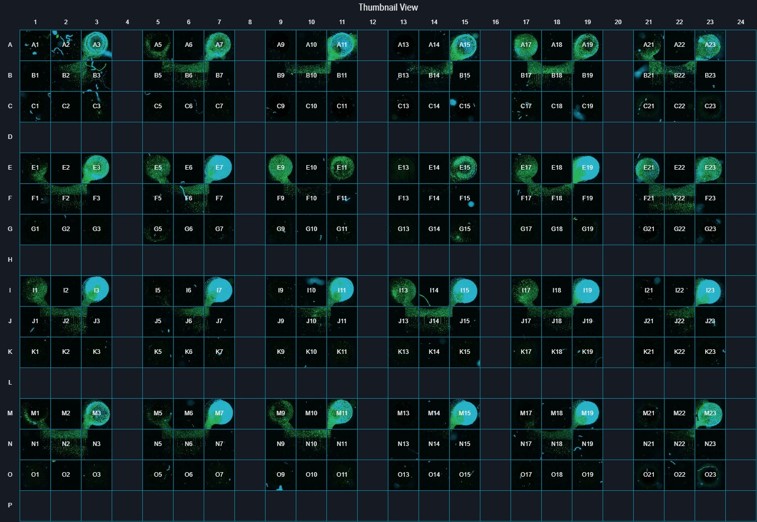
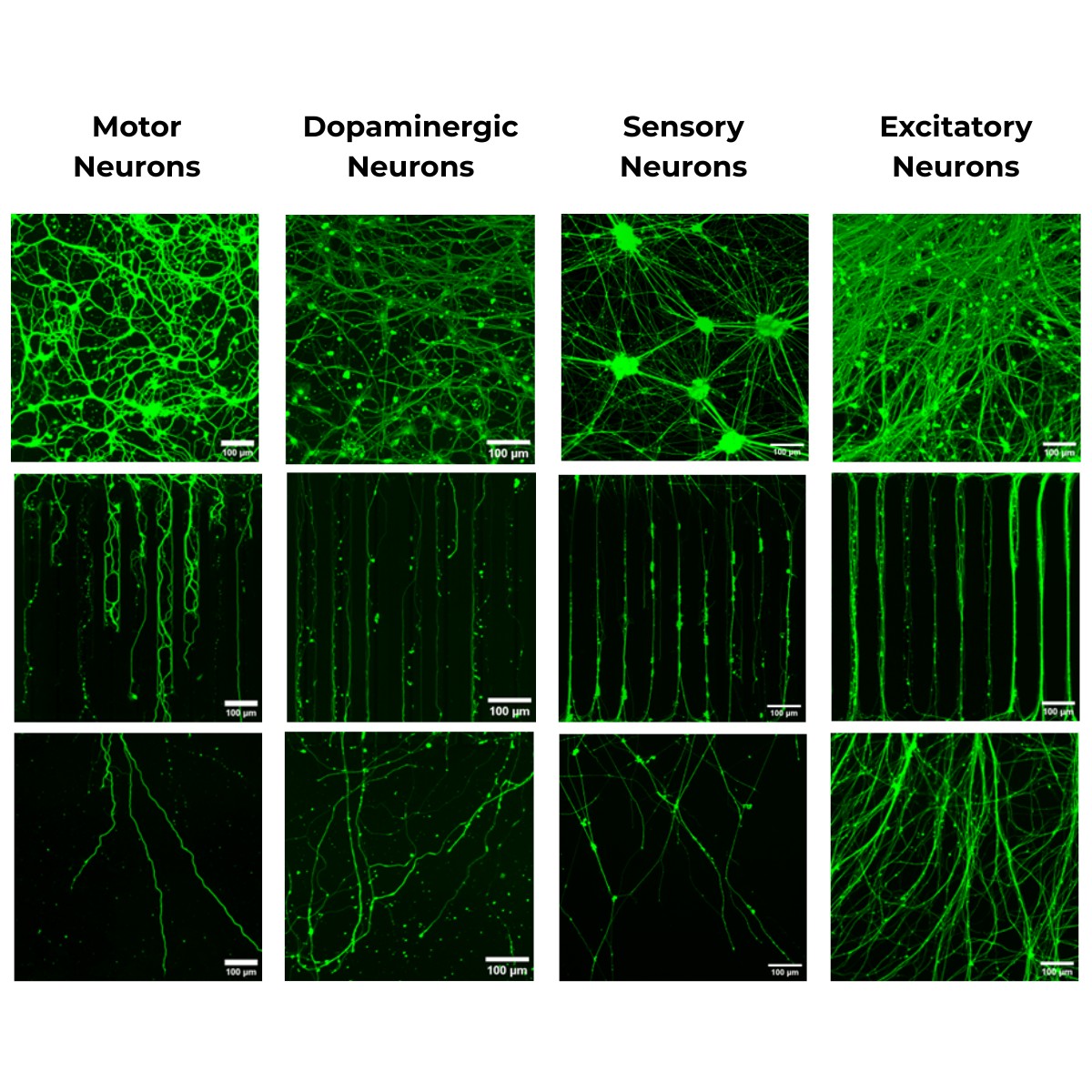
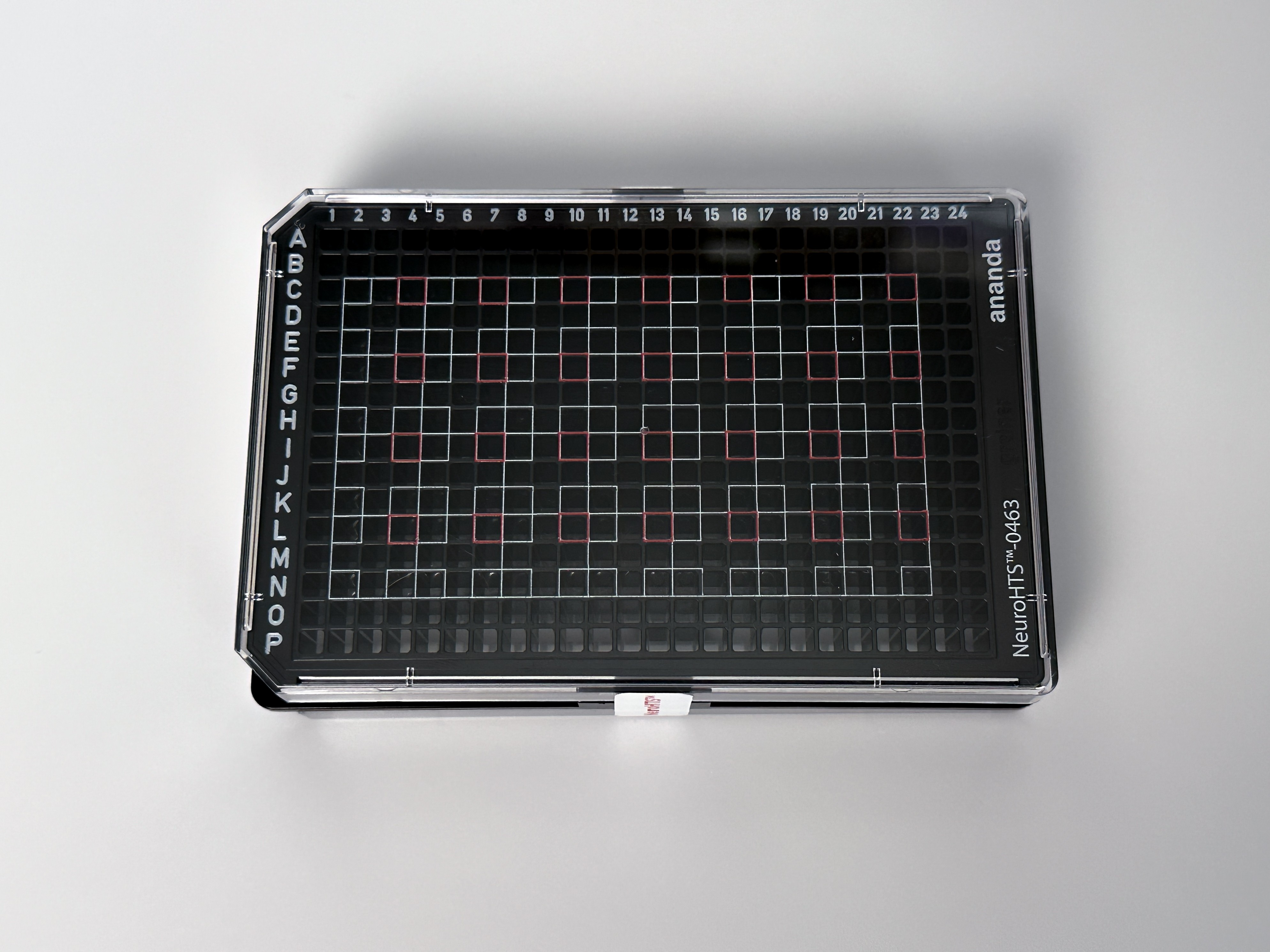
Built on a standard 384-well microplate format, each NeuroHTS™ plate contains 28 independent microfluidic units, enabling parallel testing of multiple experimental conditions while remaining fully compatible with standard plate readers, microscopes, and automated workflows. The platform supports all primary neurons as well as iPSC-derived neuronal lines, allowing researchers to clearly visualize and quantify morphological and functional changes induced by compounds, disease models, peptides, or genetic perturbations.
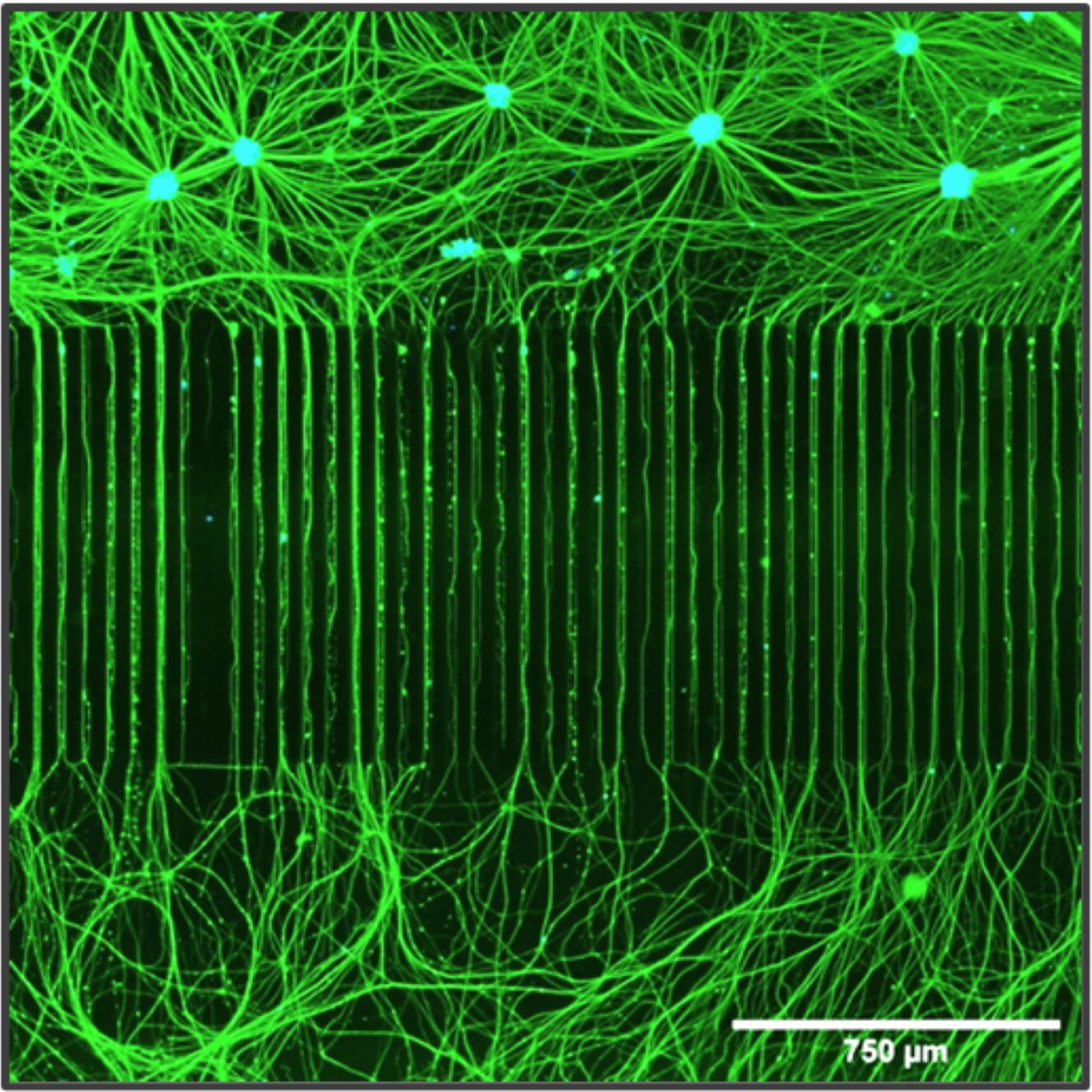
Unlike traditional neuronal cultures that form entangled and irreproducible networks, NeuroHTS™ guides neurons into structured, reproducible architectures that more closely reflect in vivo organization. This controlled organization enables scalable, high-content analysis with single-cell resolution.


Key Capabilities
1
Reproducible organization of neuronal networks with single-cell precision
Key Capabilities
2
High-throughput scalability across neuronal subtypes
Key Capabilities
3
Analysis of thousands of neurons per chip generating tens of thousands of data points
Key Capabilities
4
Seamless compatibility with standard imaging systems and plate readers
Key Capabilities
5
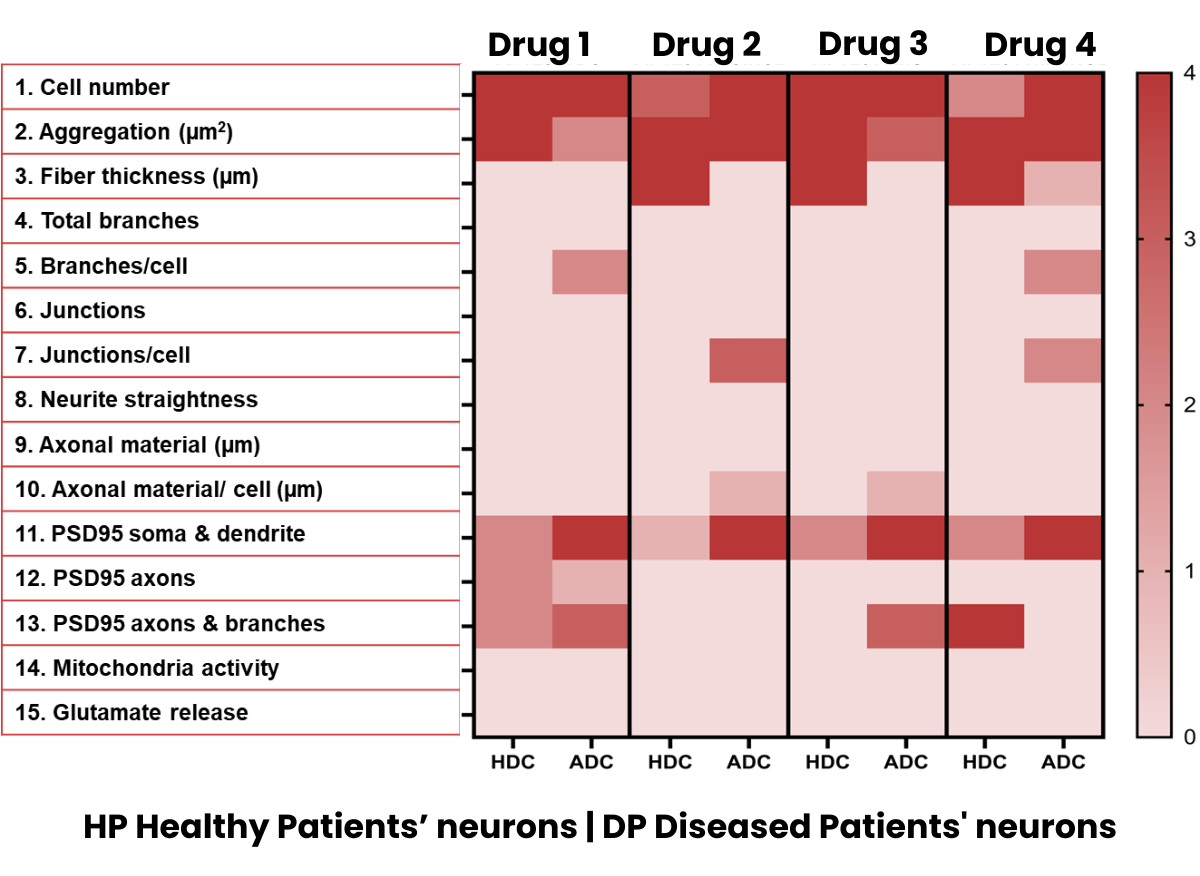
Multiparametric readouts for comprehensive assessment of neuronal health and response
Applications
NeuroHTS™ supports a wide range of neuroscience applications, enabling high-throughput, human-relevant evaluation of neuronal structure, function, and response.

Disease Modeling & Pathophysiology
Model neurodegenerative diseases such as Alzheimer’s, Parkinson’s, and ALS, as well as peripheral neuropathies using patient-derived iPSC neuronal systems.

Drug Discovery & Safety
High-throughput screening for drug efficacy, neurotoxicity profiling, and evaluation of chemotherapy-induced neuronal toxicity.

Neuronal Injury & Regeneration
Study spinal cord injury, axotomy-induced damage, and axonal degeneration and regeneration mechanisms for regenerative medicine research.

Advanced Functional & Cellular Readouts
Axonal transport compatible combined with mitochondrial profiling and transport analysis for comprehensive neuronal function assessment.
Representative Cases
Illustrative Neurodegenerative Disease Modeling examples demonstrating the capabilities of NeuroHTS™. Detailed datasets and study designs are available upon request.
Request Our Sample Data

Alzheimer’s Disease
NeuroHTS™ enables high-content, single-cell analysis of neurons derived from healthy and Alzheimer’s donors, revealing disease-associated changes in neuronal morphology, network organization, and function. Multiparametric profiling allows quantification of reductions in cell number, axonal material, branching complexity, and network integrity, while supporting long-term cultures (>40 days) for longitudinal studies and downstream validation.
What this demonstrates
- Disease-relevant neuronal phenotypes at single-cell resolution
- Long-term culture stability for progressive neurodegeneration studies
- Compatibility with complementary assays (e.g., electrophysiology, secretion assays)
Charcot–Marie–Tooth Disease (CMT)
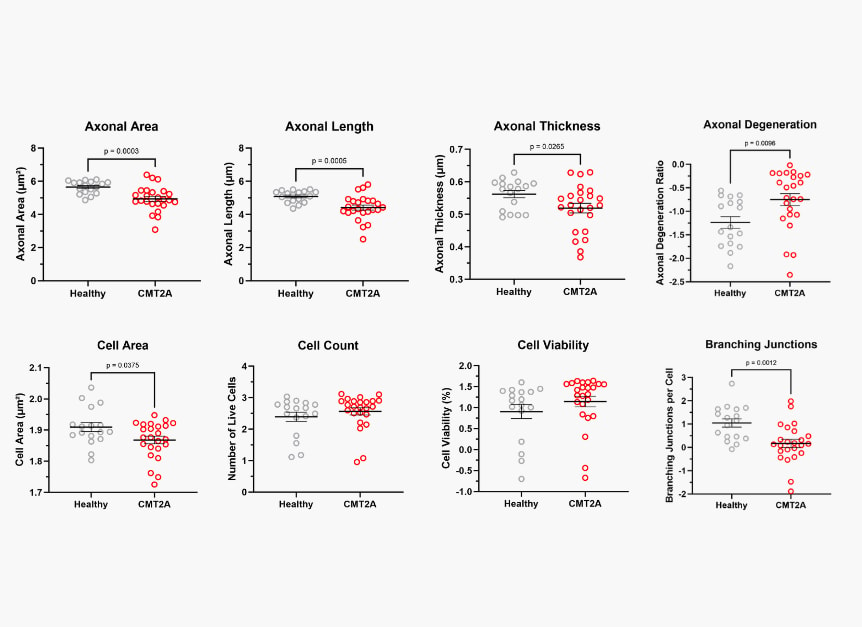
Using iPSC-derived motor neurons, NeuroHTS™ captures both structural and functional deficits associated with CMT. Multiparametric neuromorphological profiling and live mitochondrial tracking revealed disease-associated alterations in axonal morphology and a significant reduction in mitochondrial motility compared to healthy controls, highlighting the platform’s ability to link cellular structure with functional impairment.
What this demonstrates
- Quantitative differentiation between healthy and disease phenotypes
- Integrated analysis of neuronal morphology and mitochondrial dynamics
- Human-relevant modeling of peripheral neuropathies
Parkinson’s Disease
NeuroHTS™ integrates with microelectrode array (MEA) systems to assess electrophysiological function in iPSC-derived dopaminergic neurons from healthy and Parkinson’s donors. Functional readouts—including firing rate, synchrony, and network bursting—enable detection of disease-specific hyperactivity and pharmacological responses, supporting both disease modeling and compound evaluation.
What this demonstrates
- Functional maturation and long-term neuronal activity
- Disease-specific electrophysiological signatures
- Pharmacological modulation captured in human neuronal networks
Additional Use Case Areas
- Chemotherapy-induced neurotoxicity
- Axonal injury and regeneration (axotomy models)
- Mechanism-of-action and phenotypic screening
- Neuronal co-culture with glia


Accelerate breakthroughs with human-based organ-on-a chip solutions that deliver faster, more predictive results.
Main Page

Home
About Us
Our Platforms
Our Services
Our News
Contact Us
Our Resources
Product literature
Publications
News&Events
Webinars
Copyright© 2026 Ananda Device. inc
Terms and Conditions

Languages: EN






NeuroHTS™
One platform. Multiple applications. Human-relevant neuronal research with high-throughput and reproducibility.

Next Generation
Neuroscience Discovery Platform
NeuroHTS™ is a high-throughput microfluidic platform designed to organize neuronal cultures in precisely structured networks, improving reproducibility and physiological relevance compared to conventional in vitro models.
Built on a standard 384-well microplate format, each NeuroHTS™ plate contains 28 independent microfluidic units, enabling parallel testing of multiple experimental conditions while remaining fully compatible with standard plate readers, microscopes, and automated workflows. The platform supports all primary neurons as well as iPSC-derived neuronal lines, allowing researchers to clearly visualize and quantify morphological and functional changes induced by compounds, disease models, peptides, or genetic perturbations.
Unlike traditional neuronal cultures that form entangled and irreproducible networks, NeuroHTS™ guides neurons into structured, reproducible architectures that more closely reflect in vivo organization. This controlled organization enables scalable, high-content analysis with single-cell resolution.
Key Capabilities
1
Reproducible organization of neuronal networks with single-cell precision


Key Capabilities
2
High-throughput scalability across neuronal subtypes

Key Capabilities
3
Analysis of thousands of neurons per chip generating tens of thousands of data points
Key Capabilities
4
Seamless compatibility with standard imaging systems and plate readers
Key Capabilities
5
Multiparametric readouts for comprehensive assessment of neuronal health and response

Applications
NeuroHTS™ supports a wide range of neuroscience applications, enabling high-throughput, human-relevant evaluation of neuronal structure, function, and response.
Disease Modeling & Pathophysiology
Model neurodegenerative diseases such as Alzheimer’s, Parkinson’s, and ALS, as well as peripheral neuropathies using patient-derived iPSC neuronal systems.
Drug Discovery & Safety
High-throughput screening for drug efficacy, neurotoxicity profiling, and evaluation of chemotherapy-induced neuronal toxicity.
Neuronal Injury & Regeneration
Study spinal cord injury, axotomy-induced damage, and axonal degeneration and regeneration mechanisms for regenerative medicine research.

Advanced Functional & Cellular Readouts
Axonal transport compatible combined with mitochondrial profiling and transport analysis for comprehensive neuronal function assessment.
Representative Cases
Illustrative Neurodegenerative Disease Modeling examples demonstrating the capabilities of NeuroHTS™. Detailed datasets and study designs are available upon request.
Request Our Sample Data
Alzheimer’s Disease

Charcot–Marie–Tooth Disease (CMT)
Parkinson’s Disease
Additional Use Case Areas


Accelerate breakthroughs with human-based organ-on-a chip solutions that deliver faster, more predictive results.
Main Page
Home
About Us
Our Platforms
Our Services
Our News
Contact Us
Our Resources
Product literature
Publications
News&Events
Webinars
Copyright© 2026 Ananda Device. inc
|
Terms and Conditions
|
Languages: EN


Home
About Us
Our Platforms
Our Services
Our Resources
Contact Us
Client Portal

EN

NeuroHTS™
One platform. Multiple applications. Human-relevant neuronal research with high-throughput and reproducibility.
Next Generation
Neuroscience Discovery Platform
NeuroHTS™ is a high-throughput microfluidic platform designed to organize neuronal cultures in precisely structured networks, improving reproducibility and physiological relevance compared to conventional in vitro models.
Built on a standard 384-well microplate format, each NeuroHTS™ plate contains 28 independent microfluidic units, enabling parallel testing of multiple experimental conditions while remaining fully compatible with standard plate readers, microscopes, and automated workflows. The platform supports all primary neurons as well as iPSC-derived neuronal lines, allowing researchers to clearly visualize and quantify morphological and functional changes induced by compounds, disease models, peptides, or genetic perturbations.
Unlike traditional neuronal cultures that form entangled and irreproducible networks, NeuroHTS™ guides neurons into structured, reproducible architectures that more closely reflect in vivo organization. This controlled organization enables scalable, high-content analysis with single-cell resolution.
Key Capabilities
1
Reproducible organization of neuronal networks with single-cell precision
Key Capabilities
2
High-throughput scalability across neuronal subtypes
Key Capabilities
3
Analysis of thousands of neurons per chip generating tens of thousands of data points
Key Capabilities
4
Seamless compatibility with standard imaging systems and plate readers
Key Capabilities
5
Multiparametric readouts for comprehensive assessment of neuronal health and response
Applications
NeuroHTS™ supports a wide range of neuroscience applications, enabling high-throughput, human-relevant evaluation of neuronal structure, function, and response.
Disease Modeling & Pathophysiology
Model neurodegenerative diseases such as Alzheimer’s, Parkinson’s, and ALS, as well as peripheral neuropathies using patient-derived iPSC neuronal systems.

Drug Discovery & Safety
High-throughput screening for drug efficacy, neurotoxicity profiling, and evaluation of chemotherapy-induced neuronal toxicity.
Neuronal Injury & Regeneration
Study spinal cord injury, axotomy-induced damage, and axonal degeneration and regeneration mechanisms for regenerative medicine research.

Advanced Functional & Cellular Readouts
Axonal transport compatible combined with mitochondrial profiling and transport analysis for comprehensive neuronal function assessment.
Representative Cases
Illustrative Neurodegenerative Disease Modeling examples demonstrating the capabilities of NeuroHTS™. Detailed datasets and study designs are available upon request.
Request Our Sample Data
Alzheimer’s Disease
Charcot–Marie–Tooth Disease (CMT)
Parkinson’s Disease
Additional Use Case Areas

Accelerate breakthroughs with human-based organ-on-a chip solutions that deliver faster, more predictive results.
Main Page
Home
About Us
Our Platforms
Our Services
Our News
Contact Us
Our Resources
Product literature
Publications
News&Events
Webinars
Copyright© 2026 Ananda Device. inc
|
Terms and Conditions
|
Languages: EN
Home
About Us
Our Platforms
Our Services
Our Resources
Contact Us
Client Portal
EN